
Every boating season ends the same way: you take one last ride, pull the boat out of the water, and tell yourself you'll winterize it "this weekend." Three weeks later, you're scrambling to get it done before the first freeze.
If you own a Sea Hunt, you're running a boat that holds its value well—but only if you take care of it between seasons. Here's the complete off-season storage checklist that experienced Sea Hunt owners swear by.
Step 1: Flush and Treat the Engine
This one's non-negotiable. Flush your outboard with fresh water for a full 15 minutes to clear salt, sand, and debris from the cooling passages. Once flushed, fog the cylinders with engine fogging oil, change the lower unit gear lube, and stabilize the fuel. Top off the tank to prevent condensation—that's how ethanol-blend fuel goes bad over the winter.
Step 2: Deep Clean Everything
Before you cover the boat, give it a thorough wash. Salt residue left on gelcoat over the winter will etch the surface. Clean the hull, deck, and all hardware with a marine-grade soap. Remove all cushions, life jackets, and soft goods—these need to dry completely and be stored indoors to prevent mildew.
Wax the gelcoat after washing. A good marine wax creates a barrier against moisture and UV that supplements whatever cover you're using. Think of it as your boat's first layer of defense.
Step 3: Protect the Electronics
Disconnect the battery and store it on a trickle charger indoors. Remove any portable electronics (handheld GPS, portable VHF) and store them inside. For hardwired units like your fishfinder and chartplotter, a quality T-Top cover or helm cover keeps moisture off the screens and wiring connections.
Step 4: Cover It Right
This is where most people cut corners, and it's the step that matters most for long-term preservation.
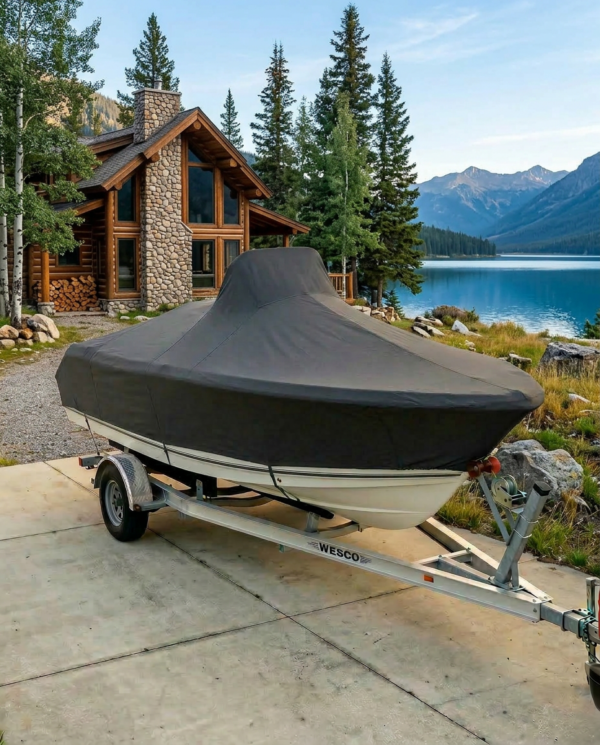
For Escape series owners running something like the 235 Escape center console, a properly fitted cover prevents the months of UV bombardment and rain exposure that destroy gelcoat and upholstery. The Escape line has wider beam measurements than many comparable boats, which means generic covers leave gaps at the transom and bow—exactly the places where water pools and causes the most damage.
Bay boat owners with a 22 BXBR center console face a unique challenge: the lower freeboard means rain and snow accumulate on the cover faster. A model-specific cover with proper support poles and tension keeps the fabric taut so water runs off instead of pooling. Generic covers sag on boats with low freeboard, creating the weight pockets that eventually stretch or tear the material.
For the bigger offshore rigs—your 229 Ultra center consoles and your 27 Gamefish T-Tops —full coverage is essential. These boats represent significant investments, and the cost difference between a proper cover and a discount option is tiny compared to a gel coat restoration or an electronics replacement.
Step 5: Support the Cover
Even the best cover needs support. Use a cover support pole system (or even a simple adjustable pole) at the center of the boat to create a peak that prevents water from pooling. Make sure all vents in the cover are unobstructed—trapped moisture under a sealed cover is worse than moderate exposure to open air.
Step 6: Check Monthly
Don't just cover it and forget it until April. Check your boat once a month during the off-season. Tighten any straps that have loosened, clear debris off the cover, verify that cover support poles haven't shifted, and make sure no critters have found their way inside.
The bottom line: a Sea Hunt is a boat built to last. But "built to last" still requires your participation. The owners who get the best longevity and resale value from their boats are the ones who winterize properly and invest in covers designed for their specific sea hunt model. Do it right once, and you'll spend your spring commissioning the boat instead of repairing winter damage.